
There is no universal “urchin rig.” That is not a weakness of the category; it is the reason the shape has spread so quickly. The same basic bait can be a tiny jig under a float, a drop-shot bait that hardly moves, a bottom-contact bait, a suspended target or a large weightless presentation. The important part is making the hardware serve the presentation instead of forcing every bait onto the same hook.
Start with where the bait needs to live, then choose the hardware.
Anglers often build an urchin rig backward: pick a hook because it fits the package, add a weight because it casts well, then try to make the bait behave. A better sequence is to decide whether you want the bait under a float, hovering in open water, sitting just off bottom, crawling bottom, dropping vertically or moving through cover. That tells you what the hook and weight must accomplish.
Urchin baits create more water resistance than a smooth worm with the same center-body size. The arms act like dozens of tiny brakes. That means a small change in head weight can produce a bigger-than-expected change in fall rate, and a hook that looks small on the bench can still dominate a micro bait once it is in the water.
“Control” means you can reach the depth, keep contact or maintain the intended line angle. Extra weight is not free—it changes the bait's fall, posture and how naturally the arms open after the bait stops.
Can the hook clear?
The point and gap have to get past the center body on a bite. A hook can technically fit inside the bait and still leave too little room for the plastic to collapse.
Are they still free?
If the keeper, hook eye, line knot or lead head pins a large bundle of arms together, you may have removed the low-speed movement you chose the bait for.
Match the rig to the job.
| Job | Good starting rig | What the rig controls | Main mistake to watch |
|---|---|---|---|
| Micro jig / float | Small jighead, fixed or slip float | Exact depth, compact presentation, direct hookset | Head too heavy; hook crowds the body |
| Hover / open-water finesse | Light jighead, light nail/center weight, hover-style setup | Slow fall, level posture, horizontal movement | Weight pulls the bait nose-down or makes it spin |
| Drop shot | Exposed finesse hook or body-compatible hook above sinker | Depth is controlled by leader while bait stays lightly rigged | Too much shaking; arms wrap the point |
| Ned / bottom jig | Mushroom, ball or similar head | Bottom contact and repeatable fall | Oversized hook stiffens the bait or kills clearance |
| Full-size suspended | Center/internal weight, treble or purpose-built hook where appropriate | Center of mass, fall rate, hook orientation | Rig rolls or exposes hook points in the wrong direction |
| Cover / heavier target | Weightless weedless, free rig, light Texas | Cover resistance and penetration | Body cannot collapse around hook gap |
Six rigs cover most of the category.
There are dozens of variations, but these six systems explain the majority of practical decisions. Think of them as starting frameworks rather than rules.
1. Micro jighead
For the smallest urchins, the jighead is both hook and ballast. Pin the body straight and keep the hook exit clean. The head should be heavy enough to reach the zone but light enough that the bait still has time to open and move during the fall. On tiny panfish profiles, even a modest increase in jig weight can turn a drifting, breathing bait into a straight-down dart.
Does the bait hang straight? Do the arms open after the jig stops? Is the hook point visible and clear? If the bait helicopters on the fall, re-center it before changing anything else.
2. Float rig
A float separates horizontal movement from depth control. That is useful because one of an urchin's strengths is that it can keep showing life without traveling far. Beneath a fixed or slip float, wave action, current and tiny line movements make the arms work while the bait remains in a narrow strike zone.
The common mistake is over-weighting the jig simply because the float can carry it. If the goal is a slow fall or a soft suspended look, choose the jig for the bait first and the float for the jig second.
3. Drop shot
The drop shot lets the sinker handle depth while the bait stays relatively unburdened. That makes it a natural fit for compact urchins that continue to move on a pause. Nose hooking can maximize freedom; center/body hooking can change balance; weedless approaches can be useful around cover if the body gives the hook enough room to clear.
Do not assume “more shaking” creates more action. With a many-armed bait, slack-line pulses, current and a long pause can be enough. Watch the bait in shallow water and learn how little rod movement it needs.
4. Ned or ball head
A bottom jig turns the urchin into a compact bottom-contact bait. Material becomes important here. A floating or stretchy bait may stand or flare upward behind the head; a salted conventional soft plastic may settle flatter. Neither posture is automatically right. The useful question is whether the bait does what you expect when it stops.
A short-shank hook can preserve more free arm movement, while too much hook can stiffen the body. If you are hanging bottom constantly or missing fish, look at hook orientation and gap before simply changing head weight.
5. Center or internal weighted
Putting weight close to the center body is one of the defining modern ways to fish larger urchin-style baits because it keeps the mass near the middle instead of hanging a large head off one side. Current tournament coverage shows anglers using internal or center-mounted weights to control the fall while preserving the round silhouette.
The important variable is not just weight amount but weight location. A few millimeters can determine whether the bait falls level, tips, rolls or dives. Start light, test it in the water and add weight only when you know what behavior you are trying to change.
6. Weightless, free rig or light Texas rig
Full-size profiles often carry enough body mass to cast and sink without much lead. Weightless rigging gives you the purest look at the bait's own buoyancy and water resistance. A free rig separates the sinker from the bait and lets the lure move independently after the weight reaches bottom. A light Texas rig sacrifices some freedom in exchange for cover resistance.
The question on all three is hook clearance. If the body is thick, make sure the gap remains open after the bait collapses. A hook that works beautifully in open water may not be the best choice once you bury the point and ask the body to clear it.
The bigger the bait, the more the rig becomes part of the design.
Full-size bass urchins have pushed rigging beyond standard finesse hooks. Current 2026 tournament coverage describes center-weighted systems, internal weights and treble-hook arrangements because a large body can overwhelm small conventional hooks. That does not mean every large urchin should be rigged that way; it means hook placement, weight location and body clearance matter enough that purpose-built systems have emerged.
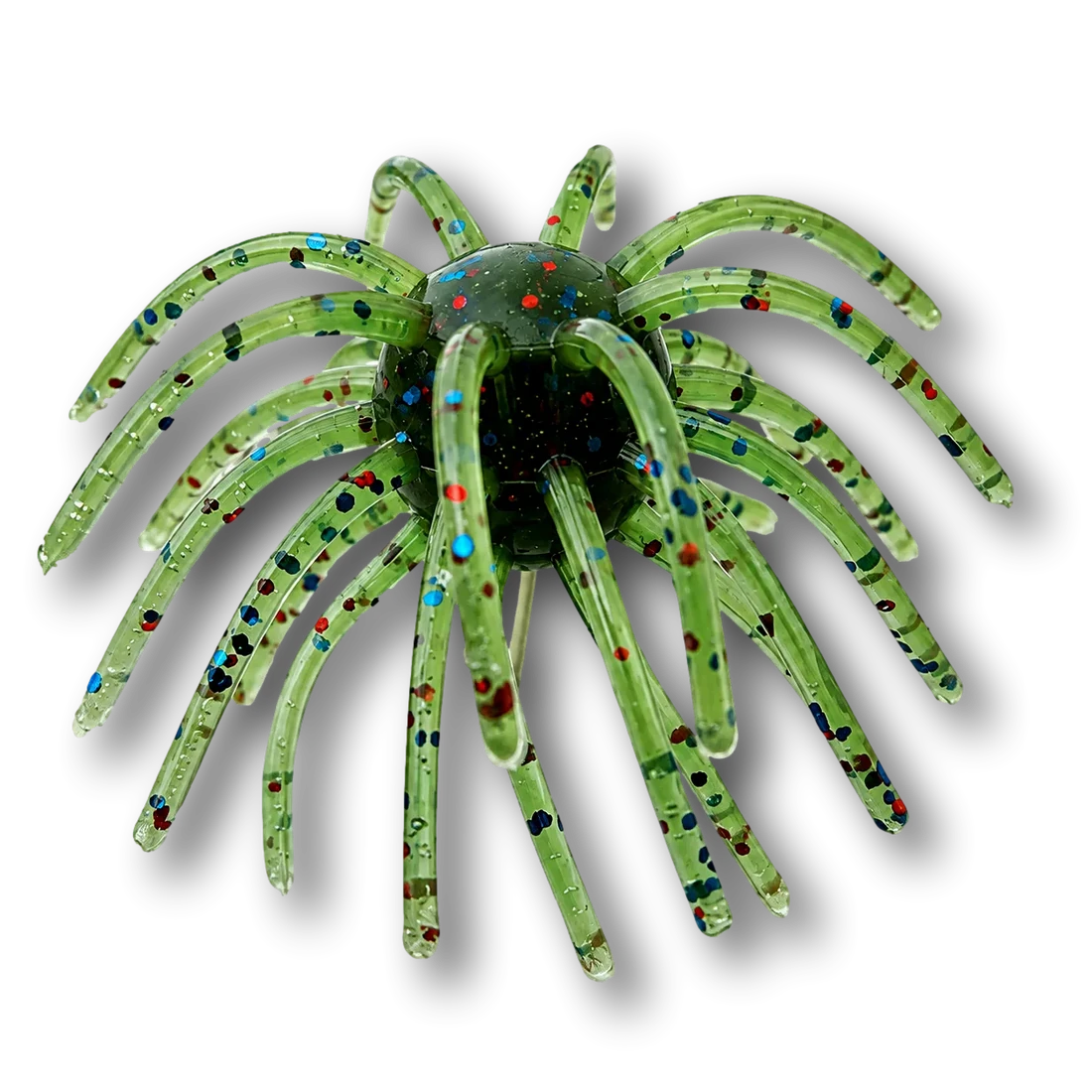
They are a current full-size bass technique, not a universal requirement. Use only where legal and appropriate, and orient exposed points carefully. In open-water applications, their purpose is hook exposure around a thick body; around cover they can become impractical quickly.
The hook has to clear the body, not merely fit inside it.
This is the most common physical mistake on the category. The body is compact, but it can be thick relative to its overall length. A hook that looks proportional next to the bait may leave almost no working gap once the body compresses.
Rig the bait exactly as you plan to fish it.
Include keeper, weight, hook orientation and any buried point. Do not judge hook fit from an unrigged hook laid next to the bait.
Push the body toward the hook point by hand.
Simulate the bait collapsing. The point should emerge cleanly without needing to tear through a thick wad of material.
Check what the arms are doing around the point.
Long or crowded arms can wrap the hook during a cast or fall. A few strands touching the hook is normal; a bundle masking the point is not.
Then check the rig in water.
Hook weight and line pull can rotate the bait into a completely different orientation than you expected on the bench.
Weight changes more than depth.
On an urchin, extra weight changes the speed of the fall, the angle of the bait, how wide the arms stay open and how much time fish have to inspect the profile. It can also change casting distance and line tension enough to alter the whole presentation.
You lose control.
The bait may never reach the zone, wind may bow the line, or current may carry the rig away from the target before it settles.
You lose the bait.
The hardware can overpower the profile, close the arms, accelerate the fall and turn a subtle suspended bait into a nose-down sinker.
For large internal-weight rigs, current Bassmaster coverage documents anglers tuning weights from light to substantially heavier depending on depth and desired fall. The useful lesson is not a universal ounce recommendation; it is that weight is a tuning control. Change it deliberately and re-test the bait every time.
The line angle can make a good rig look wrong.
Heavy line, a tight line and a steep pull angle can drag the nose of a bait upward or toward you. Slack line allows a more natural fall but reduces direct contact. A float fixes depth but adds its own pull. A drop shot puts the bait on a leader between rod and sinker. None of that is unique to urchins, but the many arms make those changes more visible because they react to small shifts in speed and angle.
For finesse work, use tackle light enough to preserve the intended movement but strong enough for the cover and fish. For full-size rigs, the hook and body can demand much heavier tackle than the visual softness of the bait suggests. Match the system to the rig, not the nickname on the package.
If the rig looks wrong, diagnose one variable at a time.
| Problem | Likely causes | First things to try |
|---|---|---|
| Bait spins on the fall | Body not centered, hook enters crooked, weight is off-axis, arms are bunched unevenly | Re-rig straight; center the weight; free trapped arms |
| Falls much faster than expected | Too much weight, dense/salted body, line pulling downward | Reduce weight; test on slack line; compare with unweighted bait |
| Arms barely move | Material is stiff, hardware pins them, retrieve is too fast or line stays tight | Free the arms; pause longer; reduce hardware; compare a softer material |
| Missed bites | Hook gap too small, point buried by body/arms, body too stiff for hook style | Increase working gap; change hook placement; use more exposed hook where cover allows |
| Constant snags | Exposed points, hook orientation, too much bottom contact for cover | Change orientation; move to weedless/light Texas/free rig; reduce weight |
| Bait noses down | Weight/head too far forward, line pull, hook mass concentrated at front | Move weight toward center; lighten hardware; test a more neutral line angle |
Common rigging questions.
What is the best all-around rig to start with?
For compact bass profiles, a light jighead or drop shot teaches you the bait quickly because both are easy to control and easy to observe. For micro panfish profiles, start with a small jighead. For large suspended bass profiles, start with the maker's recommended hook and weight range because the body can require specialized hardware.
Should I shake an urchin constantly?
No. Many profiles keep moving while paused because the arms react to water and line movement. Learn how the bait behaves with almost no input before adding more rod action.
Can I Texas-rig an urchin bait?
Yes, if the body is large enough to hold the hook and collapse around the gap. Texas rigging is more useful as cover increases. On tiny or very dense-arm profiles, a weedless hook may crowd too much of the bait.
Can I use a treble hook?
Some current full-size bass systems do. It is an advanced, exposed-hook approach used to create more hook coverage around a thick center body. It is not necessary for most micro or compact urchins and becomes less practical around snaggy cover.