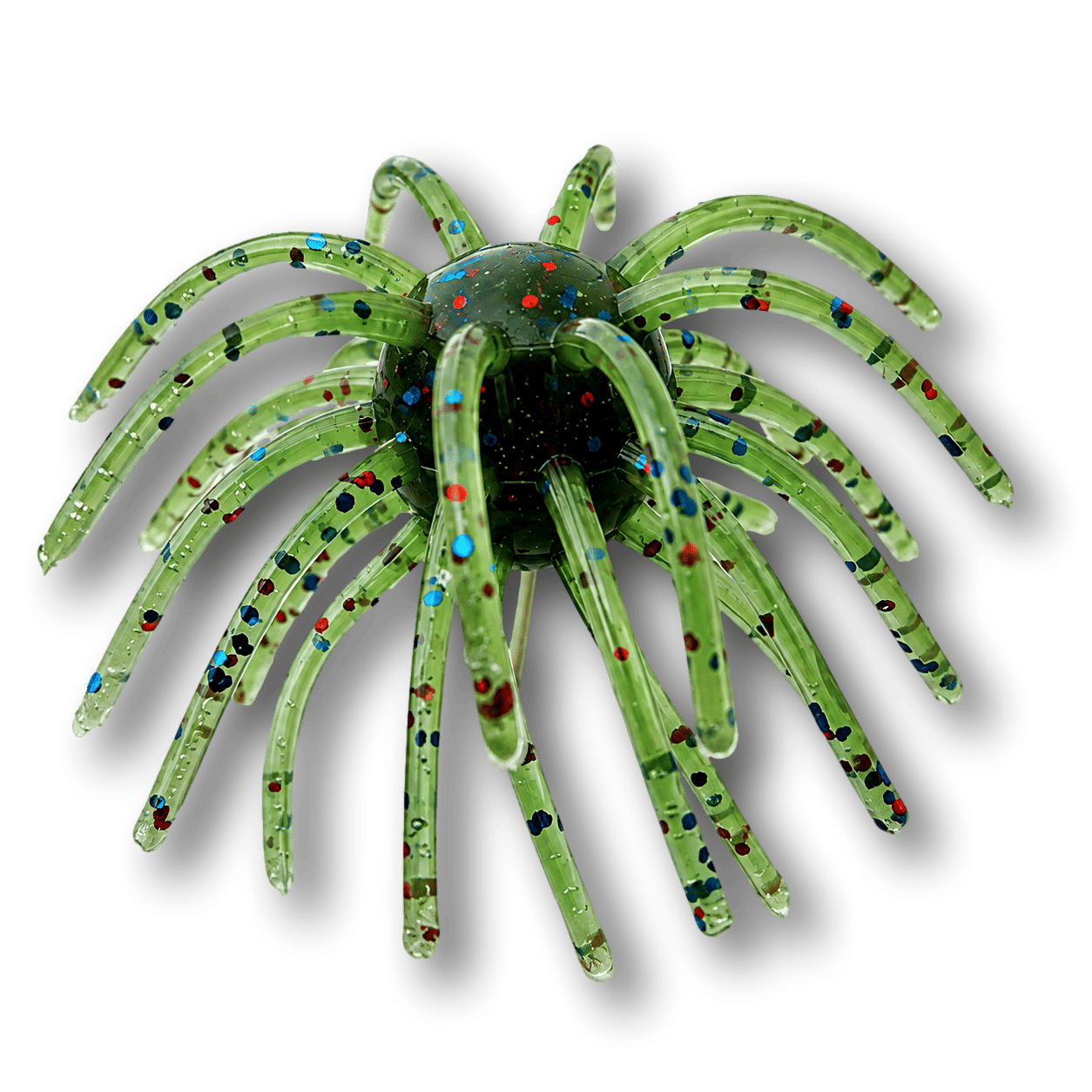
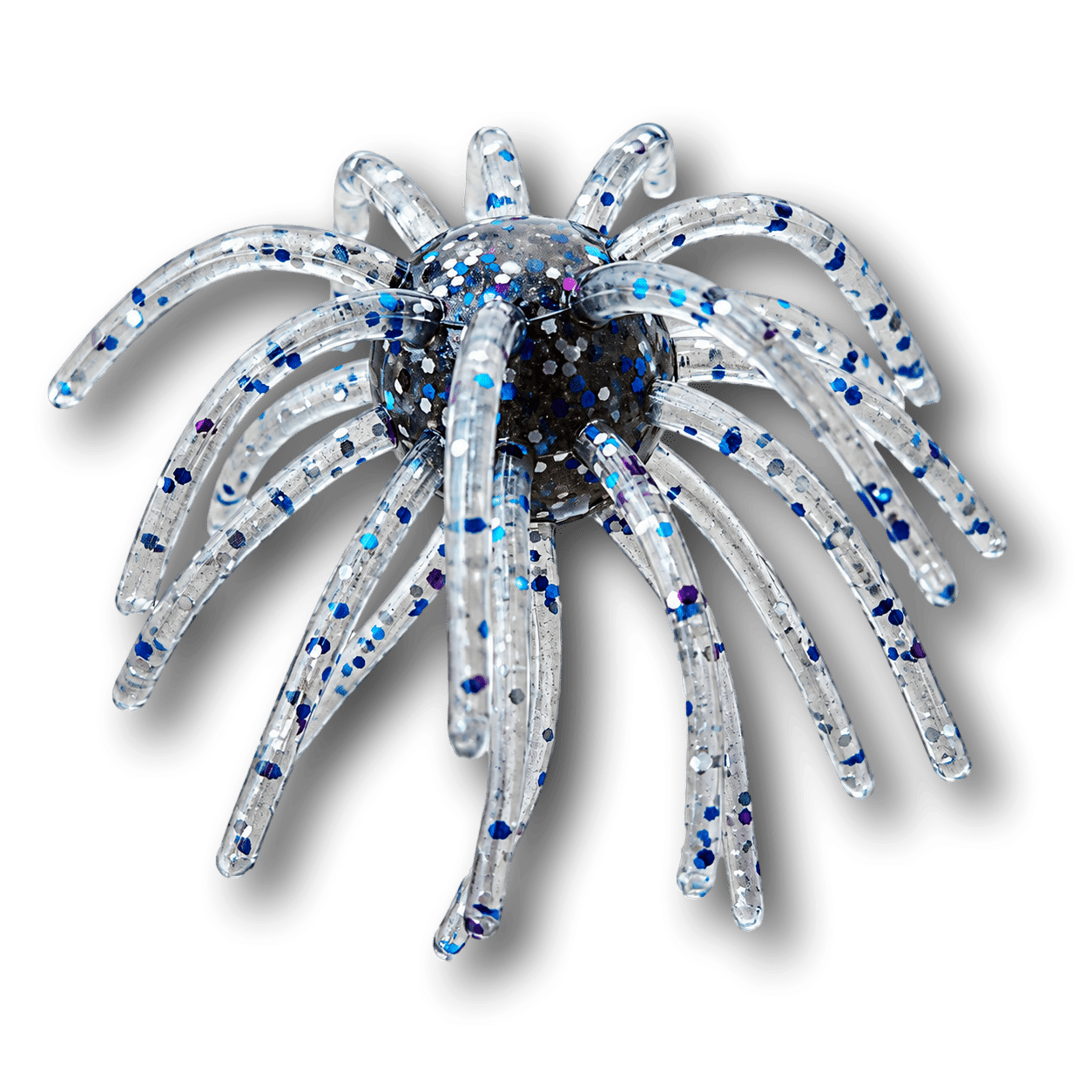
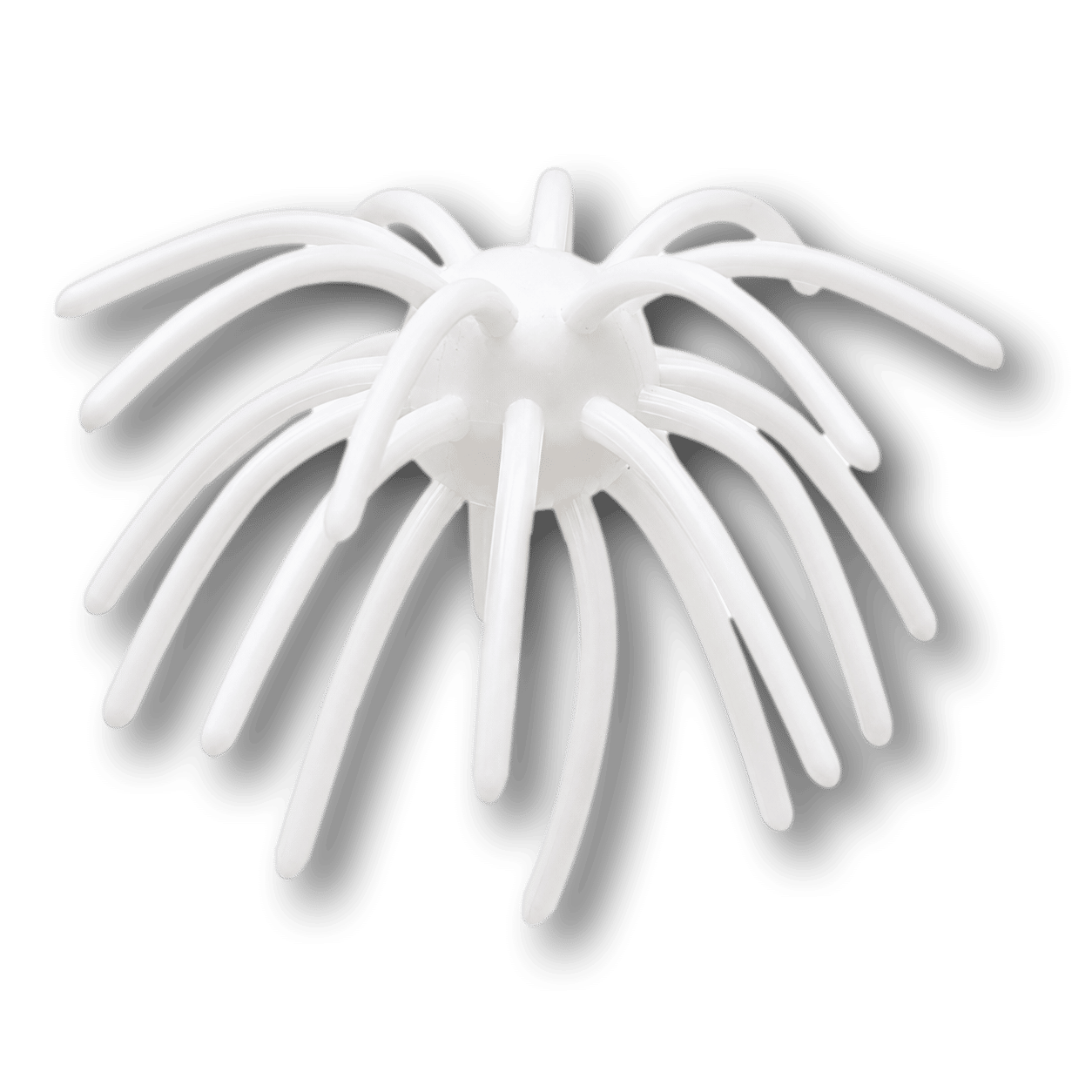
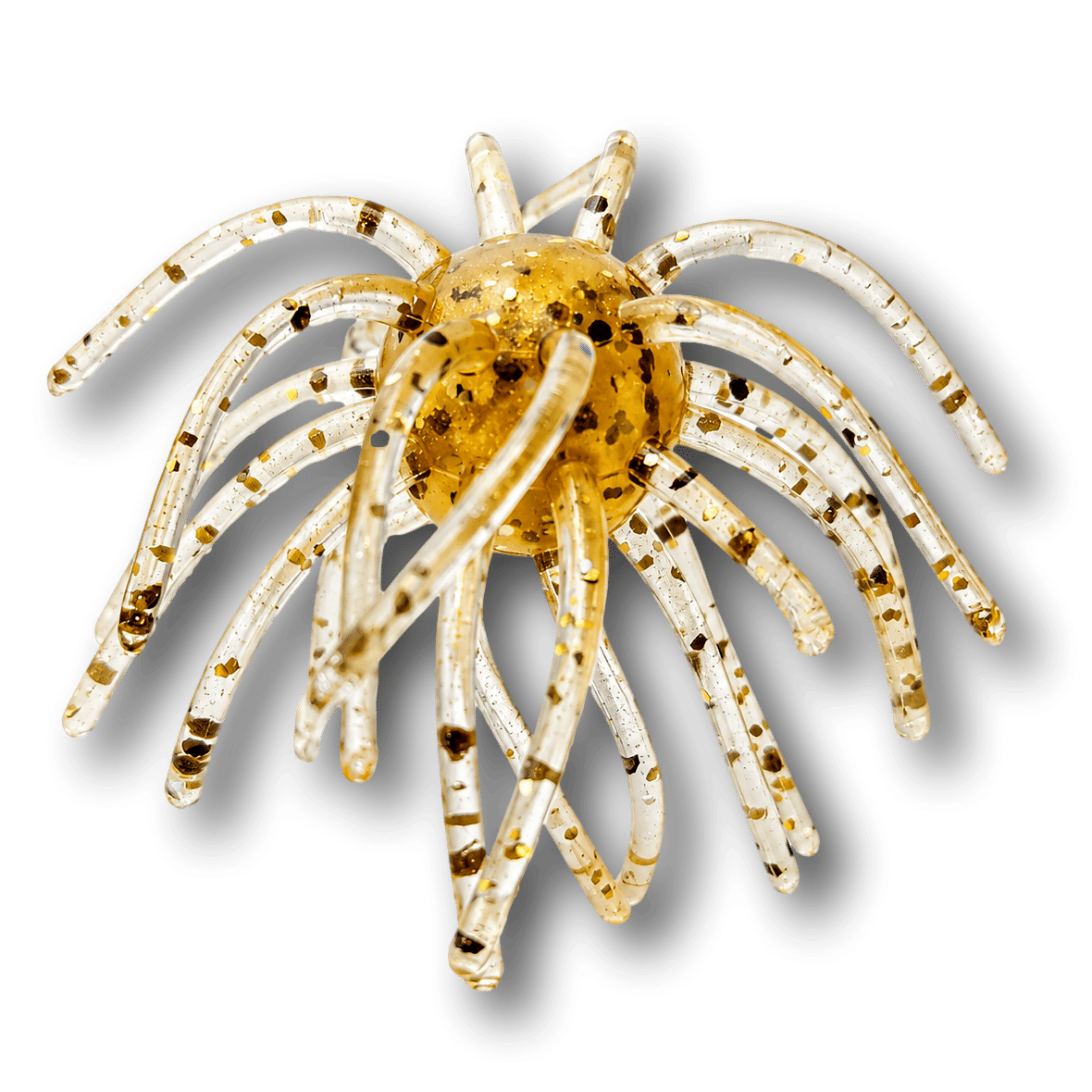
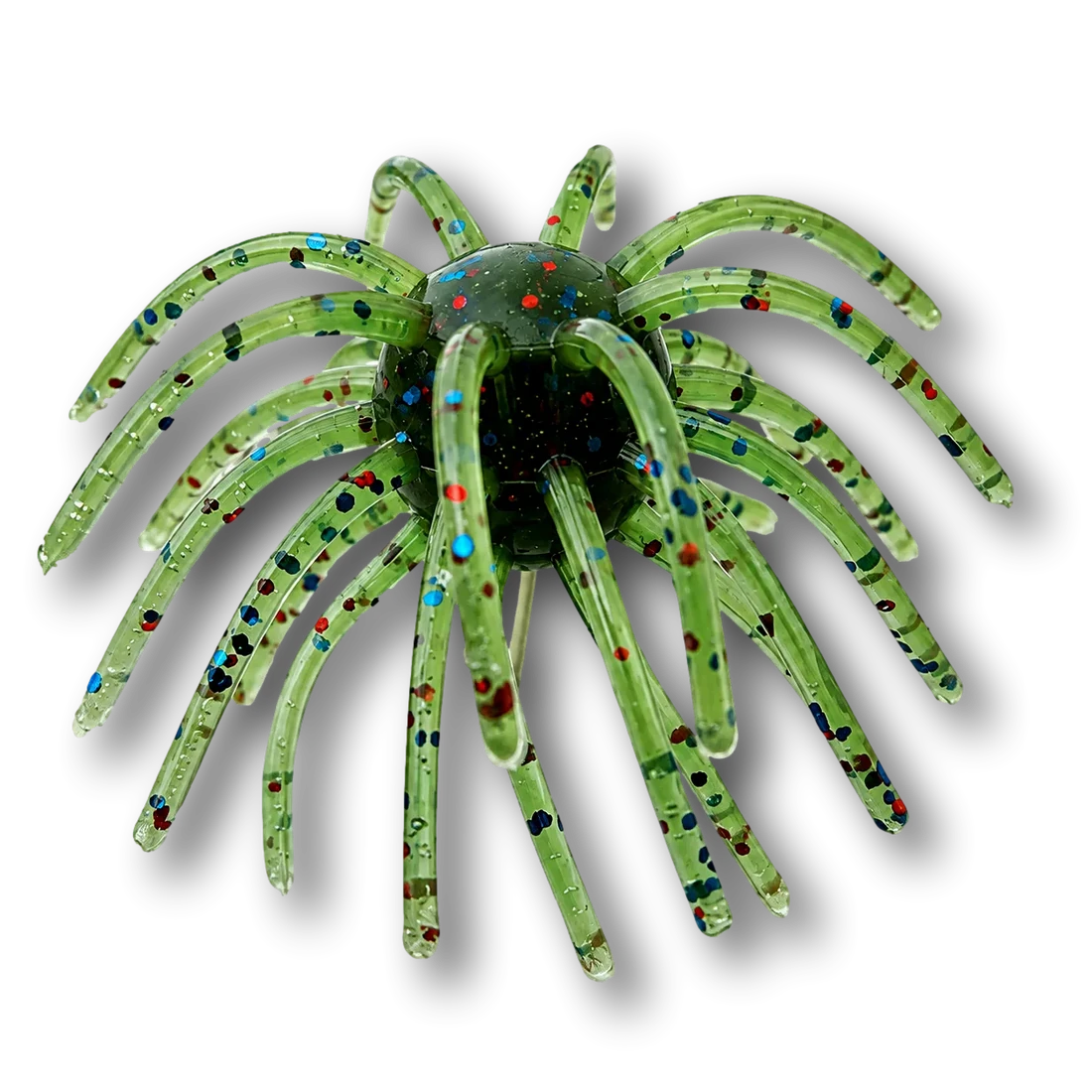
An urchin bait is not one technique and it is not one standardized shape. It is a family of soft plastics built around a body in the middle with flexible arms running all the way around it.
That family now stretches from tiny panfish baits on micro jigheads to oversized bass versions designed to hover, fall slowly, crawl bottom, wake near the surface or hang in front of suspended fish. Two baits can look almost identical in a product photo and fish very differently once you add a hook and weight.
The useful way to understand the category is not to ask which brand makes the best urchin. Start with the job. Decide where the bait needs to live, how fast you want it to fall, whether it has to come through cover, how big a target you want fish to see, and how much hook or weight the bait can carry without ruining the action you bought it for.
A quick word on the words.This category is messy. Anglers and makers say legs, tentacles, strands, feelers and appendages for the same outside pieces. On this site, we call them arms. You will also hear core, ball, center mass and body; we use body. When we mean the whole bait from one arm tip to the opposite arm tip, we say tip-to-tip size. When we mean only the middle, we say body size. Those are not official industry standards; they are plain-English terms we can use consistently.
The working rule: choose the presentation first, then choose the urchin that can actually do that job.